08/04/2009

John Hope, the Prince Who Refused the Kingdom


http://www.truthout.org/040809EDU
Henry Louis Gates Jr., The Root: "When I was 20, I decided to hitchhike across the African continent, more or less following the line of the equator, from the Indian Ocean to the Atlantic. I packed only one pair of sandals and one pair of jeans to make room for the three hefty books I had decided to read from cover to cover: Don Quixote, Moby Dick and From Slavery to Freedom: A History of Negro Americans. I read the latter - the black-and-white-bound third edition of John Hope Franklin's 1947 book - while sailing down the Congo River and recovering from a nasty bout of dysentery. It became such a valued reference for me that I kept it, for years, in the bookcase at my bedside."

04/04/2009

Gill Scott Heron - The Revolution Will Not Be Televised

Gil Scott-Heron turned 60 on April 1st

Gil Scott-Heron stands as a towering figure of black popular music. With a masters in creative writing from Johns Hopkins, the writer, poet, composer, pianist, and modern-day griot is a true artist in an industry lacking true artistry.

Scott-Heron emerged in the early 1970s with albums such as What’s Going On and There’s A Riot Goin’ On. By 1970, there was a profound shift in the struggle for equality as the fight for civil rights gave way to the demand for Black Power. The Civil Rights Movement had lost its focus, being ripped apart by differing interest groups and ignored by a wartime US government. The voices of its leaders were silenced by jail or bullets.

Black popular music reflected this change. The voices on the radio stopped preaching brotherhood and togetherness and started reporting the facts, and the music got more aggressive. Leading the new attack was a new voice: articulate, uncompromising, and enraged. The voice held the light up to the country’s missteps and shook up an apathetic audience. The voice was Gil Scott-Heron’s. Scott-Heron was born in Chicago in 1949. He grew up in Lincoln, Tennessee and later the Chelsea neighborhood of the Bronx.

As a student, he admired the poetry of Langston Hughes and followed his footsteps by enrolling in Lincoln University. By age 20, he completed the novel The Vulture and the book of poetry, Small Talk At 125th & Lenox. The Vulture was an auspicious beginning, heralded by Essence as "a strong start for a writer with important things to say." In the 1970’s, Scott-Heron hooked up with Flying Dutchman records to produce several important albums including Pieces of Man and Free Will.

During the 1980s, for Arista label, Scott-Heron released twelve albums. Then, after a twelve-year break, he signed with TVT Records and released Spirits in 1993. The first cut of this album, "Message To The Messenger," is a warning to today’s rappers, urging them to take responsibility in their art and in their communities. Since then, he has played to sell-out crowds all over the world, performing at major festivals in England and the United States, including New York’s Central Park.

The revolution will no be televised
You will not be able to stay home, brother.
You will not be able to plug in, turn on and cop out.
You will not be able to lose yourself on skag and skip,
Skip out for beer during commercials,
Because the revolution will not be televised.

The revolution will not be televised.
The revolution will not be brought to you by Xerox
In 4 parts without commercial interruptions.
The revolution will not show you pictures of Nixon
blowing a bugle and leading a charge by John
Mitchell, General Abrams and Spiro Agnew to eat
hog maws confiscated from a Harlem sanctuary.

The revolution will not be televised.
The revolution will not be brought to you by the
Schaefer Award Theatre and will not star Natalie
Woods and Steve McQueen or Bullwinkle and Julia.
The revolution will not give your mouth sex appeal.
The revolution will not get rid of the nubs.
The revolution will not make you look five pounds
thinner, because the revolution will not be televised, Brother.

There will be no pictures of you and Willie May
pushing that shopping cart down the block on the dead run,
or trying to slide that color television into a stolen ambulance.
NBC will not be able predict the winner at 8:32
or report from 29 districts.
The revolution will not be televised.

There will be no pictures of pigs shooting down
brothers in the instant replay.
There will be no pictures of pigs shooting down
brothers in the instant replay.
There will be no pictures of Whitney Young being
run out of Harlem on a rail with a brand new process.
There will be no slow motion or still life of Roy
Wilkens strolling through Watts in a Red, Black and
Green liberation jumpsuit that he had been saving
For just the proper occasion.

Green Acres, The Beverly Hillbillies, and Hooterville
Junction will no longer be so damned relevant, and
women will not care if Dick finally gets down with
Jane on Search for Tomorrow because Black people
will be in the street looking for a brighter day.
The revolution will not be televised.

There will be no highlights on the eleven o'clock
news and no pictures of hairy armed women
liberationists and Jackie Onassis blowing her nose.
The theme song will not be written by Jim Webb,
Francis Scott Key, nor sung by Glen Campbell, Tom
Jones, Johnny Cash, Englebert Humperdink, or the Rare Earth.
The revolution will not be televised.

The revolution will not be right back
after a message about a white tornado, white lightning, or white people.
You will not have to worry about a dove in your
bedroom, a tiger in your tank, or the giant in your toilet bowl.
The revolution will not go better with Coke.
The revolution will not fight the germs that may cause bad breath.
The revolution will put you in the driver's seat.

The revolution will not be televised, will not be televised,
will not be televised, will not be televised.
The revolution will be no re-run brothers;
The revolution will be live.

09/03/2009

Fourth International Conference on Education, Labor and Emancipation

This year’s Theme: Manifesto for New Social Movements: Equity, Access, and Empowerment


It will be held in Salvador, Bahia, Brazil on June 16th - 19th 2009.

A brief description follows:
Scholars, teachers, students and activists from various fields and countries will convene in Salvador, Bahia (Brazil) to compare theoretical perspectives, share pedagogical experiences, and work toward developing a global movement for social justice in and through education. We invite proposals from the following perspectives: indigenous, feminist, postcolonial, Marxist/neomarxist, queer theory, critiques of neoliberalism/globalization, CRT, liberation theology, anthropology, comparative/international education, etc.
Visit our website for more information. http://academics.utep.edu/confele

We appreciate if you can forward this invitation to others who may be interested.

Please do send in your proposals, here are the guidelines:

CALL FOR PROPOSALS
We are currently witnessing the emergence of a new context for education, labor, and emancipatory social movements. Global flows of people, capital, and energy increasingly define the world we live in. The multinational corporation, with its pursuit of ever-cheaper sources of labor and materials and its disregard for human life, is replacing the nation-state as the dominant form of economic organization. Faced with intensifying environmental pressures and depletion of essential resources, economic elites have responded with increased militarism and restriction of civil liberties.
At the same time, masses of displaced workers, peasants, and indigenous peoples are situating their struggles in a global context. Labor activists can no longer ignore the concomitant struggles of Indigenous peoples, African diasporic populations, other marginalized ethnic groups, immigrants, women, GLBT people, children and youth. Concern for democracy and human rights is moving in from the margins to challenge capitalist priorities of “efficiency” and exploitation. In some places, the representatives of popular movements are actually taking the reins of state power. Everywhere we look, new progressive movements are emerging to bridge national identities and boundaries, in solidarity with transnational class, gender, and ethnic struggles.
At this juncture, educators have a key role to play. The ideology of market competition has become more entrenched in schools, even as opportunities for skilled employment diminish. We must rethink the relationship between schooling and the labor market, developing transnational pedagogies that draw upon the myriad social struggles shaping students’ lives and communities. Critical educators need to connect with other social movements to put a radically democratic agenda, based on principles of equity, access, and emancipation, at the center of a transnational pedagogical praxis.
Distinguished scholars from numerous fields and various countries will convene in Salvador, Bahia (Brazil) to compare and contribute to theoretical perspectives, share pedagogical experiences, and work toward developing a global movement of enlightening activism. Issues related to education, labor, and emancipation will be addressed from a range of theoretical perspectives, including but not limited to the following:

  • Critical Pedagogy

  • Critical Race Theory


  • Postcolonial Studies

  • Marxist and Neo-Marxist Perspectives


  • Social Constructivism

  • Comparative/International Education


  • Postmodernism

  • Indigenous Perspectives


  • Feminist Theory

  • Queer Theory


  • Poststructuralism

  • Critical Environmental Studies


  • Critiques of Globalization and Neoliberalism

  • Liberation Theology


Proposals may be offered as panel presentations or individual papers. Please indicate type of proposal with the submission.

Individual paper proposals should contain a cover sheet with the paper title, contact information (e-mail, address, telephone number, and affiliation), a brief bio, for each presenter, and an abstract of no more than 250 words (not including references). Please indicate whether you will present in Portuguese, Spanish or English. Presenters who wish to present in Portuguese should nevertheless include an English or Spanish translation of the abstract with their submission.

Panel proposals must include a cover sheet with the panel title and organizers’ contact information (e-mail, address, telephone number, affiliation), as well as an abstract of the overall panel theme (no more than 400 words, not including references) and abstracts/bios for each paper included in the panel. Please indicate whether panel members will present in Portuguese, Spanish or English. Proposals submitted in Portuguese should include translations (either English or Spanish) of the panel theme with each individual abstract.

Please submit proposals by E-mail only to: confele@utep.edu <mailto:confele@utep.edu> . THE DEADLINE FOR PROPOSALS IS March 1st, 2009. Proposals must be accompanied by your conference registration in order to be considered.

Following the tradition of the last three conferences, a book will be produced comprising the most engaging papers from CONFELE 2009, as selected by an editorial board. Presenters wishing to be considered for this volume should submit full papers (in APA style) for review by August 1st, 2009.

César Augusto Rossatto, Ph.D.

Associate Professor

Critical Pedagogy & Multiculturalism and Social Justice

The University of Texas at El Paso

College of Education, Room #812

El Paso, TX 79968-0574

(915) 747-5253

www.academics.utep.edu/confele

21/02/2009

Slave in Jefferson Davis' home gave Union key secrets

Story Highlights

  • William Jackson, a slave, learned key details inside the home of Jefferson Davis
  • Davis was president of the Confederacy; Jackson leaked key secrets to the Union
  • "Because of his role as a menial servant, he simply was ignored" by Southerners
  • Author said history must never forget the sacrifice of African-Americans in Civil War

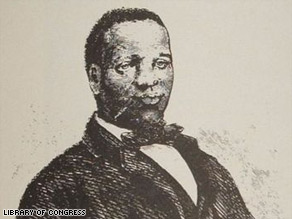
WASHINGTON (CNN) -- William Jackson was a slave in the home of Confederate president Jefferson Davis during the Civil War. It turns out he was also a spy for the Union Army, providing key secrets to the North about the Confederacy.

William Jackson, a slave, listened closely to Jefferson Davis' conversations and leaked them to the North.

William Jackson, a slave, listened closely to Jefferson Davis' conversations and leaked them to the North.

Jackson was Davis' house servant and personal coachman. He learned high-level details about Confederate battle plans and movements because Davis saw him as a "piece of furniture" -- not a human, according to Ken Dagler, author of "Black Dispatches," which explores espionage by America's slaves.

"Because of his role as a menial servant, he simply was ignored," Dagler said. "So Jefferson Davis would hold conversations with military and Confederate civilian officials in his presence."

Dagler has written extensively on the issue for the CIA's Center for the Study of Intelligence . Video Watch the stories of slaves as spies »

In late 1861, Jackson fled across enemy lines and was immediately debriefed by Union soldiers. Dagler said Jackson provided information about supply routes and military strategy.

"In Jackson's case, what he did was ... present some of the current issues that were affecting the Confederacy that you could not read about in the local press that was being passed back and forth across local lines. He actually had some feel for the issues of supply problems," Dagler said.

Jackson and other slaves' heroic efforts have been a forgotten legacy of the war -- lost amid the nation's racially charged past and the heaps of information about the war's historic battles. But historians over the last few decades have been taking an interest in the sacrifice of African-Americans during those war years.

Jackson's espionage is mentioned in a letter from a general to Secretary of War Edwin Stanton. Maj. Gen. Irvin McDowell refers to "Jeff Davis' coachman" as the source of information about Confederate deployments. Video Watch grandson of slaves: "They call me Little Man" »

Dagler said slaves who served as spies were able to collect incredibly detailed information, in large part because of their tradition of oral history. Because Southern laws prevented blacks from learning how to read and write, he said, the slave spies listened intently to minute details and memorized them.

"What the Union officers found very quickly with those who crossed the line ... was that if you talked to them, they remembered a great more in the way of details and specifics than the average person ... because again they relied totally on their memory as opposed to any written records," he said.

Jackson wasn't the only spy. There were hundreds of them. In some cases, the slaves made it to the North, only to return to the South to risk being hanged. One Union general wrote that he counted on black spies in Tennessee because "no white man had the pluck to do it."

No one was better than Robert Smalls, a slave who guided vital supply ships in and out of Charleston Harbor in South Carolina. He eventually escaped and provided the Union with "a turning of the forces in Charleston Harbor," according to an annual report of the Navy secretary to President Lincoln.

"A debriefing of him gave ... the Union force there the entire fortification scheme for the interior harbor," Dagler said.

One of the most iconic spies was Harriet Tubman, who ran the Underground Railroad, bringing slaves to the North. In 1863, she was asked by the Union to help with espionage in South Carolina. She picked former slaves from the region for an espionage ring and led many of the spy expeditions herself.

"The height of her intelligence involvement occurred late in 1863 when she actually led a raid into South Carolina," Dagler said. "In addition to the destruction of millions of dollars of property, she brought out over 800 slaves back into freedom in the North."

As the nation marks Black History Month in February, Dagler said that history should include the sacrifices of the African-Americans who risked their lives for their nation. Many paid the ultimate sacrifice.

"They were all over the place, and no one [in the South] considered them to be of any value. Consequently, they heard and saw virtually everything done by their masters, who were the decision-makers," Dagler said.

Whatever happened to William Jackson, the spy in Jefferson Davis's house? Unfortunately, that remains a great unknown.

"He simply disappeared from history, as so many of them have."

View source article

A nation of cowards?

By Charles M. Blow

Most whites harbor a hidden racial bias that many are unaware of and don’t consciously agree with. And getting them to talk frankly about race is still hard.

This began as a relatively quiet Black History Month. The biggest highlight was a 72-year-old former Klansman scratching “apologize to John Lewis for beating him up” off his bucket list.

Then came Attorney General Eric Holder’s scathing comments about America being “a nation of cowards” because we don’t have “frank” conversations about race. That got a lot of attention.

I take exception to Holder’s language, but not his line of reasoning. Calling people cowards is counterproductive. It turns the conversation into a confrontation — moving it beyond the breach of true dialogue and the pale of real understanding.

That said, frank conversations are always welcomed. But, before we start, it might be helpful to have a better understanding of the breadth and nature of racial bias.

According to an ABC News/Washington Post poll released last month, twice as many blacks as whites thought racism was a big problem in this country, while twice as many whites as blacks thought that blacks had achieved racial equality.

Furthermore, according to a 2003 Gallup poll, two in five of blacks said that they felt discriminated against at least once a month, and one in five felt discriminated against every day. But, a CNN poll from last January found that 72 percent of whites thought that blacks overestimated the amount of discrimination against them, while 82 percent of blacks thought that whites underestimated the amount of discrimination against blacks.

What explains this wide discrepancy? One factor could be that most whites harbor a hidden racial bias that many are unaware of and don’t consciously agree with.

Project Implicit, a virtual laboratory maintained by Harvard, the University of Washington and the University of Virginia, has administered hundreds of thousands of online tests designed to detect hidden racial biases. In tests taken from 2000 to 2006, they found that three-quarters of whites have an implicit pro-white/anti-black bias. (Blacks showed racial biases, too, but unlike whites, they split about evenly between pro-black and pro-white. And, blacks were the most likely of all races to exhibit no bias at all.) In addition, a 2006 study by Harvard researchers published in the journal Psychological Science used these tests to show how this implicit bias is present in white children as young as 6 years old, and how it stays constant into adulthood.

(You can take the test yourself.)

So why do so many people have this anti-black bias?

I called Brian Nosek, an associate professor in psychology at the University of Virginia and the director of Project Implicit, to find out. According to him, our brains automatically make associations based on our experiences and the information we receive, whether we consciously agree with those associations or not. He said that many egalitarian test-takers were shown to have an implicit anti-black bias, much to their chagrin. Professor Nosek took the test himself, and even he showed a pro-white/anti-black bias. Basically, our brains have a mind of their own.

This bias can seep into our everyday lives in insidious ways. For example, a paper presented at the annual meeting of the American Public Health Association in October found that many white doctors also had an implicit pro-white/anti-black bias, while black doctors showed almost no bias for one race or the other. The paper suggested that these biases may contribute to the unequal treatment of blacks, and that doctors may not even be conscious of it.

Can we eradicate this implicit bias? Maybe.

According to a Brown University and University of Victoria study that was published last month in the online journal PLoS One, researchers were able to ameliorate white’s racial biases by teaching them to distinguish black peoples’ faces from one another. Basically, seeing black people as individuals diminished white peoples’ discrimination. Imagine that.

Now that we know this, are we ready to talk? Maybe not yet. Talking frankly about race is still hard because it’s confusing and uncomfortable.

First, white people don’t want to be labeled as prejudiced, so they work hard around blacks not to appear so. A study conducted by researchers at Tufts University and Harvard Business School and published in the Journal of Personality and Social Psychology found that many whites — including those as young as 10 years old — are so worried about appearing prejudiced that they act colorblind around blacks, avoiding “talking about race, or even acknowledging racial difference,” even when race is germane. Interestingly, blacks thought that whites who did this were more prejudiced than those who didn’t.

Second, that work is exhausting. A 2007 study by researchers at Northwestern and Princeton that was published in the journal Current Directions in Psychological Science found that interracial interactions leave whites both “cognitively and emotionally” drained because they are trying not to be perceived as prejudiced.

The fear of offending isn’t necessarily cowardice, nor is a failure to acknowledge a bias that you don’t know that you have, but they are impediments. We have to forget about who’s a coward and who’s brave, about who feels offended and who gets blamed. Let’s focus on the facts, and let’s just talk.

•

I invite you to visit my blog, By the Numbers. Please also join me on Facebook, and follow me on Twitter, or e-mail me at chblow@nytimes.com.

View source article

19/02/2009

Please help spread the word

Dear Friend,

Yesterday, the day after President Obama signed his stimulus bill into law, the NY Post ran a cartoon depicting the bill's "author" as a dead monkey, covered in blood after being shot by police. You can see the image by clicking on the link below.

In the face of intense criticism, the Post's editor is standing by the cartoon, claiming that it's not about Obama, has no racial undertones, and that it was simply referencing a recent incident when police shot a pet chimpanzee. But it's impossible to believe that any newspaper editor could be ignorant enough to not understand how this cartoon evokes a history of racist symbolism, or how frightening this image feels at a time when death threats against President Obama have been on the rise.

Please join me and other ColorOfChange.org members in demanding that the Post apologize publicly and fire the editor who allowed this cartoon to go to print:

http://www.colorofchange.org/nypost/?id=2473-605038

The Post would have us believe that the cartoon is not about Obama. But on the page just before the cartoon appears, there's a big picture of Obama signing the stimulus bill. A reader paging through the Post would see Obama putting pen to paper, then turn the page to see this violent cartoon. The imagery is chilling.

There is a clear history in our country of racist symbolism that depicts Black people as apes or monkeys, and it came up multiple times during the presidential campaign.

We're also in a time of increased race-based violence. In the months following President Obama's election there has been a nationwide surge in hate crimes ranging from vandalism to assaults to arson on Black churches. There has been an unprecedented number of threats against President Obama since he was elected, with hate-based groups fantasizing about the killing of the president. Just a week ago, a man drove from Louisiana to the Capitol with a rifle, telling the police who stopped him that he had a "delivery" for the president.

There is no excuse for the Post to have allowed this cartoon to be printed, and even less for Editor Col Allan's outright dismissal of legitimate concerns.

But let's be clear who's behind the Post: Rupert Murdoch. Murdoch, the Post's owner, is the man behind FOX News Channel. FOX has continually attacked and denigrated Black people, politicians, institutions at every opportunity, and ColorOfChange has run several campaigns to make clear how FOX poisons public debate.

I don't expect much from Murdoch. However, with enough public pressure, we can set the stage for advertisers and subscribers to think long and hard before patronizing outlets like the Post that refuse to be held accountable.

You can help, by making clear that the Post's behavior is unacceptable, and by asking your friends and family to do the same. Please join me:

http://www.colorofchange.org/nypost/?id=2473-605038

Thanks.

15/02/2009

Bill Cosby's “Pound Cake Speech”

BlackPast.org is an independent non-profit corporation 501(c)(3). It has no affiliation with nor is it endorsed by the University of Washington. BlackPast.org is supported in part by a grant from Humanities Washington, a state-wide non-profit organization supported by the National Endowment for the Humanities, the state of Washington, and contributions from individuals and foundations.

(2004) Bill Cosby, “The Pound Cake Speech”

On May 17, 2004, the NAACP staged a gala celebration at Constitution Hall in Washington, D.C. to commemorate the 50th anniversary of the U.S. Supreme Court Decision in Brown v. Board of Education. Comedian, actor and philanthropist Bill Cosby was asked to deliver the main address. Cosby unexpectedly used the occasion to deliver a controversial speech that profiled current African American social, economic and cultural deficiencies. His speech ignited a firestorm of protest and debate. It appears below.

Ladies and gentlemen, I really have to ask you to seriously consider what you’ve heard, and now this is the end of the evening so to speak. I heard a prize fight manager say to his fellow who was losing badly, “David, listen to me. It’s not what’s he’s doing to you. It’s what you’re not doing."

Ladies and gentlemen, these people set -- they opened the doors, they gave us the right, and today, ladies and gentlemen, in our cities and public schools we have 50% drop out. In our own neighborhood, we have men in prison. No longer is a person embarrassed because they’re pregnant without a husband. No longer is a boy considered an embarrassment if he tries to run away from being the father of the unmarried child.

Ladies and gentlemen, the lower economic and lower middle economic people are not holding their end in this deal. In the neighborhood that most of us grew up in, parenting is not going on. In the old days, you couldn’t hooky school because every drawn shade was an eye. And before your mother got off the bus and to the house, she knew exactly where you had gone, who had gone into the house, and where you got on whatever you had one and where you got it from. Parents don’t know that today.

I’m talking about these people who cry when their son is standing there in an orange suit. Where were you when he was two? Where were you when he was twelve? Where were you when he was eighteen, and how come you don’t know he had a pistol? And where is his father, and why don’t you know where he is? And why doesn’t the father show up to talk to this boy?

The church is only open on Sunday. And you can’t keep asking Jesus to ask doing things for you. You can’t keep asking that God will find a way. God is tired of you . God was there when they won all those cases. 50 in a row. That’s where God was because these people were doing something. And God said, “I’m going to find a way.” I wasn’t there when God said it -- I’m making this up. But it sounds like what God would do.

We cannot blame white people. White people -- white people don’t live over there. They close up the shop early. The Korean ones still don’t know us as well -- they stay open 24 hours. I’m looking and I see a man named Kenneth Clark, he and his wife Mamie. Kenneth’s still alive. I have to apologize to him for these people because Kenneth said it straight. He said you have to strengthen yourselves, and we’ve got to have that black doll. And everybody said it. Julian Bond said it. Dick Gregory said it. All these lawyers said it. And you wouldn’t know that anybody had done a damned thing.

Fifty percent drop out rate, I’m telling you, and people in jail, and women having children by five, six different men. Under what excuse? I want somebody to love me. And as soon as you have it, you forget to parent. Grandmother, mother, and great grandmother in the same room, raising children, and the child knows nothing about love or respect of any one of the three of them. All this child knows is “gimme, gimme, gimme.” These people want to buy the friendship of a child, and the child couldn’t care less. Those of us sitting out here who have gone on to some college or whatever we’ve done, we still fear our parents. And these people are not parenting. They’re buying things for the kid -- $500 sneakers -- for what? They won’t buy or spend $250 on Hooked on Phonics.

Kenneth Clark, somewhere in his home in upstate New York -- just looking ahead. Thank God he doesn’t know what’s going on. Thank God. But these people -- the ones up here in the balcony fought so hard. Looking at the incarcerated, these are not political criminals. These are people going around stealing Coca Cola. People getting shot in the back of the head over a piece of pound cake! Then we all run out and are outraged: “The cops shouldn’t have shot him.” What the hell was he doing with the pound cake in his hand? I wanted a piece of pound cake just as bad as anybody else. And I looked at it and I had no money. And something called parenting said if you get caught with it you’re going to embarrass your mother." Not, "You’re going to get your butt kicked." No. "You’re going to embarrass your mother." "You’re going to embarrass your family." If you knock that girl up, you’re going to have to run away because it’s going to be too embarrassing for your family. In the old days, a girl getting pregnant had to go down South, and then her mother would go down to get her. But the mother had the baby. I said the mother had the baby. The girl didn’t have a baby. The mother had the baby in two weeks. We are not parenting.

Ladies and gentlemen, listen to these people. They are showing you what’s wrong. People putting their clothes on backwards. Isn’t that a sign of something going on wrong? Are you not paying attention? People with their hat on backwards, pants down around the crack. Isn’t that a sign of something or are you waiting for Jesus to pull his pants up? Isn’t it a sign of something when she’s got her dress all the way up to the crack -- and got all kinds of needles and things going through her body. What part of Africa did this come from? We are not Africans. Those people are not Africans; they don’t know a damned thing about Africa. With names like Shaniqua, Shaligua, Mohammed and all that crap and all of them are in jail. (When we give these kinds names to our children, we give them the strength and inspiration in the meaning of those names. What’s the point of giving them strong names if there is not parenting and values backing it up).

Brown versus the Board of Education is no longer the white person’s problem. We’ve got to take the neighborhood back. We’ve got to go in there. Just forget telling your child to go to the Peace Corps. It’s right around the corner. It’s standing on the corner. It can’t speak English. It doesn’t want to speak English. I can’t even talk the way these people talk. “Why you ain’t where you is go, ra.” I don’t know who these people are. And I blamed the kid until I heard the mother talk. Then I heard the father talk. This is all in the house. You used to talk a certain way on the corner and you got into the house and switched to English. Everybody knows it’s important to speak English except these knuckleheads. You can’t land a plane with, “Why you ain’t…” You can’t be a doctor with that kind of crap coming out of your mouth. There is no Bible that has that kind of language. Where did these people get the idea that they’re moving ahead on this. Well, they know they’re not; they’re just hanging out in the same place, five or six generations sitting in the projects when you’re just supposed to stay there long enough to get a job and move out.

Now, look, I’m telling you. It’s not what they’re doing to us. It’s what we’re not doing. 50 percent drop out. Look, we’re raising our own ingrown immigrants. These people are fighting hard to be ignorant. There’s no English being spoken, and they’re walking and they’re angry. Oh God, they’re angry and they have pistols and they shoot and they do stupid things. And after they kill somebody, they don’t have a plan. Just murder somebody. Boom. Over what? A pizza? And then run to the poor cousin’s house.

They sit there and the cousin says, “What are you doing here?” “I just killed somebody, man.” “What?” “I just killed somebody; I’ve got to stay here.” “No, you don’t.” “Well, give me some money, I’ll go….” “Where are you going?” “North Carolina.”

Everybody wanted to go to North Carolina. But the police know where you’re going because your cousin has a record.

Five or six different children -- same woman, eight, ten different husbands or whatever. Pretty soon you’re going to have to have DNA cards so you can tell who you’re making love to. You don’t who this is. It might be your grandmother. I’m telling you, they’re young enough. Hey, you have a baby when you’re twelve. Your baby turns thirteen and has a baby, how old are you? Huh? Grandmother. By the time you’re twelve, you could have sex with your grandmother, you keep those numbers coming. I’m just predicting.

I’m saying Brown versus the Board of Education. We’ve got to hit the streets, ladies and gentlemen. I’m winding up, now -- no more applause. I’m saying, look at the Black Muslims. There are Black Muslims standing on the street corners and they say so forth and so on, and we’re laughing at them because they have bean pies and all that, but you don’t read, “Black Muslim gunned down while chastising drug dealer.” You don’t read that. They don’t shoot down Black Muslims. You understand me. Muslims tell you to get out of the neighborhood. When you want to clear your neighborhood out, first thing you do is go get the Black Muslims, bean pies and all. And your neighborhood is then clear. The police can’t do it.

I’m telling you Christians, what’s wrong with you? Why can’t you hit the streets? Why can’t you clean it out yourselves? It’s our time now, ladies and gentlemen. It is our time. And I’ve got good news for you. It’s not about money. It’s about you doing something ordinarily that we do -- get in somebody else’s business. It’s time for you to not accept the language that these people are speaking, which will take them nowhere. What the hell good is Brown V. Board of Education if nobody wants it?

What is it with young girls getting after some girl who wants to still remain a virgin. Who are these sick black people and where did they come from and why haven’t they been parented to shut up? To go up to girls and try to get a club where “you are nobody....” This is a sickness, ladies and gentlemen, and we are not paying attention to these children. These are children. They don’t know anything. They don’t have anything. They’re homeless people. All they know how to do is beg. And you give it to them, trying to win their friendship. And what are they good for? And then they stand there in an orange suit and you drop to your knees: “He didn’t do anything. He didn’t do anything.” Yes, he did do it. And you need to have an orange suit on, too.

So, ladies and gentlemen, I want to thank you for the award -- and giving me an opportunity to speak because, I mean, this is the future, and all of these people who lined up and done -- they’ve got to be wondering what the hell happened. Brown V. Board of Education -- these people who marched and were hit in the face with rocks and punched in the face to get an education and we got these knuckleheads walking around who don’t want to learn English. I know that you all know it. I just want to get you as angry that you ought to be. When you walk around the neighborhood and you see this stuff, that stuff’s not funny. These people are not funny anymore. And that‘s not my brother. And that’s not my sister. They’re faking and they’re dragging me way down because the state, the city, and all these people have to pick up the tab on them because they don’t want to accept that they have to study to get an education.

We have to begin to build in the neighborhood, have restaurants, have cleaners, have pharmacies, have real estate, have medical buildings instead of trying to rob them all. And so, ladies and gentlemen, please, Dorothy Height, where ever she’s sitting, she didn’t do all that stuff so that she could hear somebody say “I can’t stand algebra, I can’t stand…" and “what you is.” It’s horrible.

Basketball players -- multimillionaires can’t write a paragraph. Football players, multimillionaires, can’t read. Yes. Multimillionaires. Well, Brown v. Board of Education, where are we today? It’s there. They paved the way. What did we do with it? The White Man, he’s laughing -- got to be laughing. 50 percent drop out -- rest of them in prison.

You got to tell me that if there was parenting -- help me -- if there was parenting, he wouldn’t have picked up the Coca Cola bottle and walked out with it to get shot in the back of the head. He wouldn’t have. Not if he loved his parents. And not if they were parenting! Not if the father would come home. Not if the boy hadn’t dropped the sperm cell inside of the girl and the girl had said, “No, you have to come back here and be the father of this child.” Not ..“I don’t have to.”

Therefore, you have the pile up of these sweet beautiful things born by nature -- raised by no one. Give them presents. You’re raising pimps. That’s what a pimp is. A pimp will act nasty to you so you have to go out and get them something. And then you bring it back and maybe he or she hugs you. And that’s why pimp is so famous. They’ve got a drink called the “Pimp-something.” You all wonder what that’s about, don’t you? Well, you’re probably going to let Jesus figure it out for you. Well, I’ve got something to tell you about Jesus. When you go to the church, look at the stained glass things of Jesus. Look at them. Is Jesus smiling? Not in one picture. So, tell your friends. Let’s try to do something. Let’s try to make Jesus smile. Let’s start parenting. Thank you, thank you.
Sources:
<http://www.eightcitiesmap.com/transcript_bc.htm>
Copyright 2007-2008 - BlackPast.org v2.0 | blackpast@blackpast.org | Your donations help us to grow. | We welcome your suggestions.